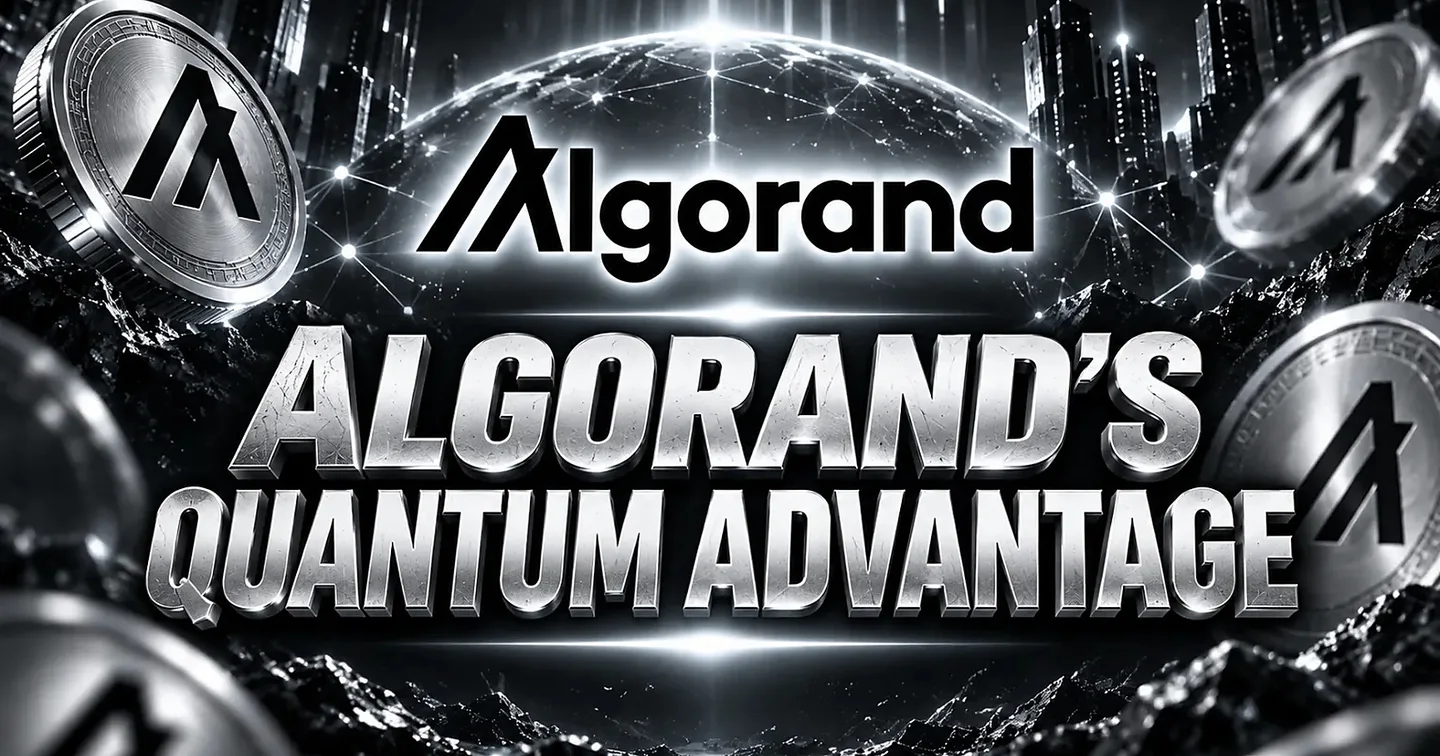
Algorand is putting quantum resilience at the center of its business strategy. Its November 6 update outlines a push to serve custodians, wallet providers, issuers, and other networks without requiring them to rebuild their existing systems. The goal is to turn that technical work into a sustainable source of revenue. Algorand’s community update
That’s a practical way to approach adoption. A company already managing customer assets needs a clear path to improve its infrastructure. Giving that company something it can integrate into its existing business makes the conversation much easier to start.
CEO William Herkelrath brings experience from both sides of that conversation. Before joining Algorand, he led Chainlink Labs’ enterprise division and served as chief revenue officer at Curv, the digital asset custody company acquired by PayPal. His background connects the technology to the institutions Algorand wants to reach. Algorand’s leadership team
The strongest part of this direction is that Algorand already has working technology behind it.
Native Falcon-1024 accounts arrived through the v5.0.0 upgrade earlier in 2026. These accounts authorize transactions using signatures designed to withstand attacks from sufficiently powerful quantum computers. They build on Falcon signatures used in Algorand’s State Proofs beginning in 2022 and earlier transaction capabilities introduced in 2025. Those are existing foundations supporting November’s strategy, rather than features first launched this month. Native Falcon accounts
The useful question is how a business adopts that protection and keeps its systems current as the underlying technology changes.
Algorand addressed that directly in its November 10 explanation of crypto agility. The network supports multiple signature schemes, with further schemes and hybrid accounts on its roadmap. The intention is to make future changes easier to adopt without forcing applications through a complete rewrite every time the preferred cryptography changes. Algorand’s approach to crypto agility
For a wallet provider, that could reduce the work involved in adapting products as standards evolve. For users, the benefit would be a smoother transition between account protections. That ability to keep improving is a useful selling point because institutions are choosing infrastructure they expect to maintain for years.
November also brought improvements for the people running the network.
The algod v5.1.1 release reduces memory use and disk activity under default settings. It also improves networking, ledger processing, and APIs while adding groundwork for additional account signing schemes. The release notes explicitly state that it contains no consensus protocol upgrade. Falcon-512 support and several other additions are listed as not yet enabled. Algod v5.1.1 release notes
That distinction deserves attention. Code being included in a release doesn’t mean every feature is available for use.
The immediate benefit is more efficient node software. Lower resource demands can make existing infrastructure easier to operate and give operators more breathing room. That’s useful progress even when it doesn’t produce a flashy announcement. A network needs people willing and able to keep running it.
The commercial shift also comes with changes for builders. Algorand will pause xGov grants indefinitely on December 6. It closed its Forum, concluded the Ecosystem Advisory Council as a company-run body, and ended sponsorship of the Algorand Technical Council. Periodic developer meetings continue, and staking rewards remain committed through January 2028. Community program changes
Project King Safety is also paused. Proposals to lift the ALGO supply cap, enable and capture MEV, or increase the minimum transaction fee are no longer under consideration at this time. Fees tied to particular transaction requirements may still change. Staking and fee priorities
For builders, those decisions change where support comes from. A stronger commercial focus needs clear routes for useful projects to reach customers and earn revenue.
Water credits provide a concrete example of the kind of application that deserves attention.
In November, Algorand highlighted Hypercube’s role as an accredited operator in Ceará’s regulated water-credit market in Brazil. Hypercube’s credits are issued on Algorand, providing a traceable record intended to help prevent the same benefit from being counted more than once. Hypercube has also publicly confirmed its accreditation. Hypercube’s water-credit work
The timing needs to stay clear. Ceará established the market through legislation in March 2026. November’s coverage brought renewed attention to an existing initiative. BDO’s October bulletin describes the framework for generating, verifying, certifying, trading, and retiring water credits. BDO’s water-credit bulletin
This is a blockchain use case people outside crypto can understand. A buyer needs to know what a credit represents, where its supporting evidence comes from, and whether it has already been used. A traceable record helps participants check those details.
The physical measurement still matters. Recording a claim on a blockchain doesn’t establish that the underlying water benefit occurred. Measurement and verification supply that evidence, while the digital record helps preserve accountability as credits move through the system.
That’s where Algorand’s broader direction becomes compelling. The technology has a defined job, the customer has a recognizable problem, and the value can be explained without asking anyone to care about token prices.
Algorand’s strongest commercial pitch is a specific improvement a customer can use. A wallet provider can plan for changing cryptography. A node operator can run leaner software. A water-credit buyer can inspect a clearer record. Those are concrete reasons to adopt the technology, and they give Algorand something substantial to build a business around.
-
Follow @Algorand on 𝕏
Follow @ChainLeak on 𝕏
Follow @Joshuwa on 𝕏